
1. Introduction — Why Traffic Rider Hooked Us
We remember the first time we launched Traffic Rider: a simple tilt, a hesitant tap, a bike that didn’t move the way we expected. Yet something clicked.
The mix of raw speed, near-miss thrill, and the meditative hum of traffic created an itch we had to scratch.
This article walks step-by-step through how we went from fumbling rookies to players who could read traffic like patterns on a chessboard. It’s not just a playbook — it’s a story: practice, choices, micro-habits, and the quiet thrill of incremental victory.
2. First Ride: The Rookie Experience
2.1 Controls, First Fumbles, and Early Mistakes
At first, the controls felt alien. We braked too hard, misjudged gaps, and misused nitrous.
Those early crashes taught us what the game punishes most: overconfidence.
Treat mistakes as data:
- What caused the crash?
- Late lane change?
- Overused nitro?
- Sudden stop?
Identify the pattern → correct it next run.
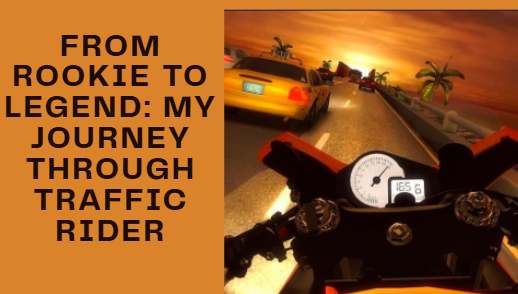
2.2 The Learning Curve — Early Lessons
Two lessons stood out quickly:
- Vision — look ahead two to three cars.
- Rhythm — smooth flow between throttle, brake, and lane changes.
Short, focused sessions helped eliminate specific errors and sharpen consistency.
3. Skill Building: Practice, Patterns, and Patience
3.1 Mastering Traffic Awareness
Traffic Rider rewards anticipation. Vehicles have tendencies:
- Trucks stay centered.
- SUVs drift wider.
- Taxis behave unpredictably.
Treat each vehicle type as having a behavior bias. When you expect patterns, decisions become instinctive.
3.2 Nitrous, Drifts, and Timing
Nitrous is a currency of speed and risk.
Use it:
- During long clear stretches
- To escape bottlenecks
- Not to mask positioning mistakes
Drifts and controlled leans help reposition quickly. Nitro should amplify skill, not compensate for errors.
3.3 Micro-Habits That Changed Everything
- Always glance two lanes left/right before committing
- Use short nitro pulses
- Default to the center lane when unsure
These tiny habits compound into consistency over time.
4. Bike Progression: From Starter to Superstar
4.1 Upgrades That Actually Matter
Engine and nitro feel exciting, but handling and braking produce more daily consistency.
Fewer crashes → more progress.
We prioritized:
- Handling
- Braking
- Engine / Nitro
4.2 Money Management & Smart Investments
Treat in-game currency like a budget.
Buy upgrades that reduce variance first.
Use cosmetic upgrades as motivation boosts — small joys that keep practice fun.
5. Game Modes & Effective Strategies
5.1 Career Mode — Structured Progress
Career mode acts like a curriculum.
Break missions into micro-goals:
- Beat Mission X three times clean
- Upgrade Y part before moving on
These bite-sized objectives maintain momentum.
5.2 Endless Mode — Score vs. Flow
Endless requires composure over time.
We stopped chasing raw points and focused on flow — syncing reactions with the road’s rhythm.
When flow locked in, high scores followed naturally.
6. Road Hazards & How We Beat Them
6.1 Understanding Traffic Types
Different vehicles, different strategies:
- Delivery vans → lane-lingers
- Buses → long, slow blockades
- Compacts → sudden lane shifts
Tagging each type mentally gives your brain preloaded responses.
6.2 Common Crash Patterns & Fixes
Frequent crash types:
- Late lane changes
- Blind-side merges
- Speeding into boxed-in areas
Counter tactics:
- Keep a safety lane
- Nitro only when an escape path exists
- Always scan several cars ahead
7. The Mental Game: Calm Under Pressure
7.1 Training Reaction Time
Reaction time can be trained.
We did:
- 2-minute micro-sprints
- Focused drills on a single pattern (like sudden braking)
Milliseconds add up.
7.2 High-Speed Decision Heuristics
Simple rules reduce cognitive load:
- If uncertain → move to an empty lane
- If clear straight + nitro → use it
- In clusters → reduce speed
Heuristics stabilize performance.
8. Community, Challenges, and Online Sharing
8.1 Watching Replays & Learning from Others
Skilled players reveal:
- Lane preferences
- Nitro timing
- Micro-adjustments
Don’t copy blindly — adapt what fits your style.
8.2 Leaderboard Discipline
When chasing ranks, we documented:
- Bike used
- Upgrades
- Strategies
This turned casual play into systematic improvement.
9. Creative Play: Tricks, Stunts, and Personal Style
Traffic Rider isn’t only about scores — it’s a playground for expression.
Near-miss patterns, smooth sweeps, stylish moves — they bring joy and keep motivation fresh.
10. Big Wins & Memorable Runs
Our favorite runs weren’t always the highest scoring — they were the cleanest.
One unforgettable run involved a perfectly timed nitro escape through dense traffic — a needle-thread moment earned through hours of training.
11. When Progress Plateaus — Restarting Growth
Plateaus are normal.
We broke them by changing:
- Bike
- Mode
- Practice routine
Sometimes we handicapped ourselves with a lower-tier bike to rebuild fundamentals.
Variety resets instincts.
12. Practical Tips — 20 Actionable Tricks
- Scan two to three cars ahead.
- Prioritize handling upgrades.
- Use short nitro bursts.
- Use a default lane.
- 2–3 minute micro-sprints.
- Study skilled replays.
- Keep an escape lane.
- Tag vehicle behaviors.
- Upgrade variance-reducing parts first.
- Learn control before speed.
- Review every crash.
- Set small weekly goals.
- Avoid nitro in clusters.
- Reward yourself with cosmetics.
- Practice lane-change timing.
- Lower sensitivity if you oversteer.
- Short sessions to avoid fatigue.
- Train with lower-tier bikes.
- Record and analyze top runs.
- Change one variable per session.
13. Why Traffic Rider Is More Than a Game
The game builds:
- Pattern recognition
- Risk management
- Calm decision-making
Skills that translate into real life — driving, work, and pressure situations.
14. Conclusion — From Rookie to Legend
We grew from jittery beginners into intentional, strategic players.
Success came from:
- Micro-habits
- Smart upgrades
- Flow-focused practice
- Studying others
- Staying calm after failures
Legends aren’t built in a day — but in thousands of tiny improvements.
15. FAQs
Q1: How long to go from beginner to good?
A week of focused practice; mastery takes weeks to months.
Q2: Best first upgrade?
Handling → braking → engine/nitro.
Q3: Is nitrous always worth it?
Use it in clear stretches; avoid using it to fix mistakes.
Q4: How to avoid unpredictable cars?
Scan ahead, keep a safety lane, and give erratic types more space.
Q5: How to improve reaction time?
Use micro-sprint drills, avoid distractions, and sleep well.