
The world of mobile racing games has seen countless titles, but few have made an impact as lasting as Traffic Rider. Over the years, this adrenaline-packed motorcycle racing game has evolved dramatically, winning the hearts of millions across the globe. In this article, we take a closer look at Traffic Rider’s journey from its humble beginnings to its position today as a major force in mobile gaming.
Introduction: A Journey Through the Asphalt
What makes Traffic Rider so addictive? Is it the thrill of racing through traffic at extreme speeds or the excitement of upgrading your dream motorcycle? Let’s dive into the game’s evolution and discover how it has adapted to players’ expectations over time.
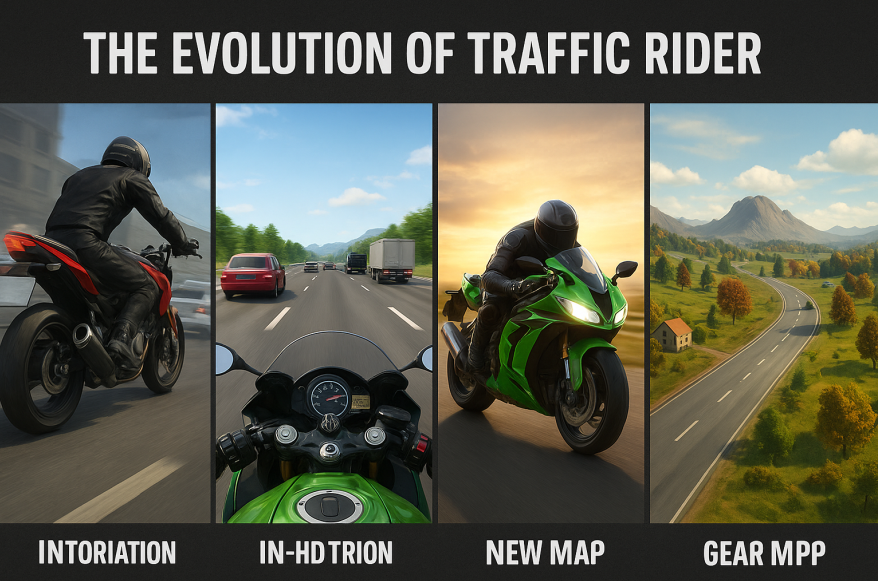
Origins of Traffic Rider
Every great game has a story, and Traffic Rider began with one simple concept: to create a realistic first-person motorcycle racing experience unlike anything seen on mobile devices before.
The Developer Behind the Game
Traffic Rider was developed by Soner Kara, a visionary dedicated to producing immersive, high-quality racing experiences. His goal was to create a game that appeals to both casual gamers and hardcore racing fans alike.
Concept and Inspiration
Inspired by classic arcade racing games and modern first-person perspectives, the game was built to make players feel like they were truly riding on real highways, city roads, and scenic routes packed with dynamic traffic.
The Initial Launch and Reception
Traffic Rider burst onto the gaming scene in 2012, immediately standing out for its fresh take on motorcycle racing and unique first-person design.
Launch Platforms and Dates
At launch, the game was made available on Android and iOS, targeting mobile gamers who craved console-like excitement in the palm of their hand.
Early Reviews and Player Reactions
Early reviews highlighted its realistic controls, immersive camera view, and challenging traffic patterns. Players especially appreciated the sense of freedom and progression through bike upgrades and missions.
Gameplay Mechanics: Then and Now
Traffic Rider has always focused on fast-paced racing through heavy traffic, but its mechanics have expanded significantly with each update.
Core Gameplay Features
The heart of the game lies in speed, precision, and timing. Players weave between vehicles, avoid collisions, and complete missions to earn coins and unlock new rides.
Controls and User Interface
The original control setup included tilt and touch steering, paired with a simple interface showing speed, distance, and mission objectives.
Game Modes
Initially, players could enjoy Career, Free Ride, and Time Trial modes. Later, Endless Mode and additional challenges were introduced to keep gameplay exciting.
Evolution of Gameplay Over the Years
Over time, updates have brought smarter traffic AI, improved physics, and dynamic weather effects, making every ride feel fresh and unpredictable.
Graphics and Visual Improvements
Graphics have always played a huge role in Traffic Rider’s appeal, evolving drastically to enhance the game’s realism and immersion.
Original Graphics Style
The early versions included 3D visuals that were impressive for their time but lacked detail in textures and lighting.
Upgrades in 2025 and Beyond
Modern updates now deliver HD-quality textures, lifelike lighting, smooth animations, and cinematic weather effects, including day-night transitions.
Motorcycles and Customization
Motorcycles are the soul of Traffic Rider, and the game’s bike collection has expanded dramatically since launch.
Bike Models Available at Launch
In the beginning, players had access to only a handful of motorcycles—each offering distinct handling and speed characteristics.
Modern Additions and Customization Options
Today, the game features dozens of bikes along with customization options such as paint jobs, nitro upgrades, and performance modifications.
Maps and Routes: Expansion Over Time
With new updates, Traffic Rider has greatly broadened its collection of maps and environments.
Initial Map Designs
Early maps mainly consisted of highways and urban roads designed for high-speed traffic dodging.
Modern-Day Maps and Open-World Features
Current versions include open-world elements, dynamic cities, scenic rural routes, and more challenging traffic systems, boosting replayability.
Sound and Music Evolution
Sound design has always enhanced the thrill of riding in Traffic Rider.
Original Soundtrack
The game originally featured energizing background music and realistic engine sounds that amplified the racing experience.
Enhanced Sound Effects in Latest Updates
Recent updates introduced spatial audio, environmental soundscapes, and customizable engine audio for a more authentic riding sensation.
Community and Multiplayer Influence
The Traffic Rider community has played a crucial role in shaping the game through continuous feedback and engagement.
Player Feedback Impact
Developers have consistently improved the game based on player suggestions, leading to better mechanics and new features.
Leaderboards and Competitions
Global leaderboards and limited-time competitions fuel healthy competition among players and keep them engaged.
Monetization and In-Game Purchases
Over the years, Traffic Rider has balanced monetization to maintain fairness for both casual players and dedicated racers.
Early Monetization Strategies
In the beginning, the game relied mainly on ads and small in-app purchases for premium upgrades or special bikes.
Current Premium Features
Today, players can enjoy cosmetic upgrades, advanced performance tuning, exclusive bikes, and premium boosts—all optional within its free-to-play structure.
The Future of Traffic Rider
The journey doesn’t end here—Traffic Rider continues to evolve.
Upcoming Features
Rumors suggest exciting upcoming features like VR support, advanced multiplayer modes, and new open-world maps that could redefine the game entirely.
Predictions and Expectations
With technology advancing rapidly, future updates may introduce ultra-realistic physics, smarter AI traffic, and personalized challenges tailored to each player’s style.
Conclusion
Traffic Rider has grown from a simple motorcycle racing game into a complete motorcycle simulation experience. With continuous improvements in visuals, mechanics, and community-driven features, it remains a beloved classic in mobile gaming. Its evolution reflects a perfect blend of creativity, innovation, and dedication to player satisfaction.
FAQs
Q1: When was Traffic Rider first launched?
A1: Traffic Rider was released in 2012 for Android and iOS.
Q2: Who developed Traffic Rider?
A2: The game was developed by Soner Kara.
Q3: What are the main game modes in Traffic Rider?
A3: Career, Free Ride, Time Trial, Endless Mode, and Challenges.
Q4: Can motorcycles be customized in Traffic Rider?
A4: Yes, players can customize bike colors, nitro boosts, and performance upgrades.
Q5: What improvements were made in the 2025 update?
A5: High-definition graphics, realistic lighting, weather effects, and expanded open-world routes.