
| We’ve all been there — one more run, just one more turn, chasing that tiny sliver of improvement. Traffic Rider’s Endless Mode is less a game and more a beautifully engineered itch: it invites us to chase distance, perfection, and a better score. In this article we unpack the secrets behind its enduring appeal and competitive depth. We’ll break mechanics down into practical takeaways so you can improve your runs, enjoy the ride more, and climb leaderboards with smarter play rather than random luck. |
Core Mechanics That Drive Endless Mode
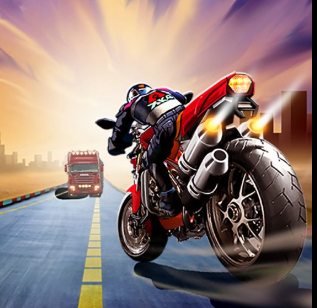
Endless Mode looks simple on the surface: accelerate, dodge traffic, collect coins. But under the hood there’s a tight mesh of systems — controls, scoring, traffic AI — working together to create emergent challenges. Understanding these mechanics is the first step toward mastering the mode.
Controls and Handling: The Foundation
The feel of the bike is everything. Traffic Rider gives you enough responsiveness that small steering adjustments matter. We must treat controls not as raw inputs but as a conversation between rider and machine. Learn how your chosen bike responds to steering, braking, and nitrous to reduce overcorrections and maintain smoother runs.
Scoring, Distance & Coin Systems
Distance is the primary currency of success, but coins, multipliers and bonuses fuel progression. We should prioritize consistent distance-building techniques over flashy but risky maneuvers that end runs early. That steady approach compounds: longer runs mean more coin opportunities, which in turn unlock upgrades that produce even longer runs.
Traffic AI and Pattern Predictability
Traffic in Endless Mode is deterministic enough that patterns emerge with practice. Vehicles often follow lanes with predictable speed bands and overtaking behaviors. Once we learn these micro-patterns, we can anticipate gaps, plan overtakes earlier, and reduce panicked steering.
Player Skill Factors
Your skill determines how reliably you turn game mechanics into long-distance runs. Let’s examine the human side of success.
Timing and Reflexes
Reflexes matter, but timing matters more. Good players time maneuvers to coincide with traffic slowdowns and gap appearances. Training your eye to detect subtle speed differentials between vehicles yields safer overtakes.
Risk Management and Decision-Making
Mastery is making fewer bad decisions. We constantly balance risk versus reward: do we squeeze past a slow truck for a coin or wait for a clearer stretch? Successful runs are full of small calculated choices; we should make those choices predictable and repeatable.
Vehicle Choice and Upgrades
Not every bike is created equal — some are rockets, others are steady cruisers. Understanding trade-offs is crucial.
Bike Classes and Trade-Offs
Lightweight bikes accelerate quickly and dodge with ease but can twitch at top speed. Heavier superbikes have impressive top speeds yet ask for more steering precision. We recommend trying a few bikes to find the one that matches your control style.
Upgrade Priorities: Speed vs Stability vs Nitrous
Upgrades are where strategy meets tangibility. We suggest a priority order: handling/stability → nitrous capacity → acceleration/top speed. Handling upgrades yield immediate returns in survivability, which compounds into longer runs and more coins.
Nitrous: The Game-Changer
Nitrous separates competent riders from top scorers. It’s not merely “go faster”—it’s a tactical resource.
When to Boost — Strategy Over Spamming
We should treat nitrous like a chess piece: use it to punish open stretches and escape congested areas after passing. Random nitrous use often ends in collisions because velocity reduces the time to correct mistakes.
Short Bursts vs Long Burns
Short bursts are excellent for gap exploitation — slam the boost into a clear lane to pass multiple vehicles quickly. Long burns work when the road ahead is open and you want to rack up distance fast. Experiment and find the rhythm that matches your bike’s handling.
Track Environment and Visual Cues
Reading the road is half the skill. The game communicates using visual and rhythmic cues — day/night lighting, shadowing, and vehicle spacing.
Night vs Day — Visibility & Risk
Night modes alter depth perception. Headlight glare and contrast changes can hide oncoming obstacles. We must rely more on patterns (vehicle spacing, predictable lane speeds) rather than visual certainty during night runs.
Road Types, Curves, and Traffic Density
Different stretches have different “risk profiles.” High-density zones are coin-rich but death-prone. Curves compress decision windows. We recommend modulating nitrous usage and choosing lines based on upcoming road types — avoid boosting right before a curve when traffic density spikes.
Psychological Hooks & Retention Design
Traffic Rider’s design is intentionally addictive. It combines fast feedback with progression and social comparison — a potent retention cocktail.
Leaderboards, Rewards & Microprogression
Leaderboards tap our competitive wiring. Microprogression (small upgrades, incremental achievements) gives us constant dopamine. We’ll chase small wins because they’re predictable, measurable improvements — and that keeps us playing.
Sensory Feedback: Sound, Camera, Vibration
The rumble of engines, the camera shake on collisions, and sound cues for nitrous combine to make every run feel cinematic. These elements are subtle nudges that keep us engaged and help us react faster by providing sensory confirmation.
Practice, Patterns & Community Knowledge
Improvement is social and iterative. We get better faster when we combine practice with community knowledge.
Learning Traffic Patterns Like Muscle Memory
Practice isn’t just repetition; it’s pattern encoding. After enough runs, lane-change decisions become reflexive; our hands act before our conscious mind fully registers the move.
Community Tips, Speedruns & Meta
The player community shares tricks — optimal bike setups, nitrous timings, and favorite routes. We gain a lot by absorbing these metas and then customizing them to our play style.
Common Mistakes and How to Avoid Them
Even experienced players fall into traps. Let’s preempt the common pitfalls.
Overuse of Nitrous
The impulse to constantly boost is tempting. We should remember that higher speed reduces our margin for error. Use nitrous deliberately — treat it like a bridge-builder, not a crutch.
Ignoring Bike Handling
Players who prioritize top speed without investing in handling upgrades often have shorter runs. A smooth, controlled ride earns more distance than a reckless hyper-speed run.
Expert Tips & Tactical Checklist
Here’s a compact checklist we can use before and during runs to shift the odds in our favor.
Pre-run Prep
- Choose a bike that matches your reflex profile.
- Allocate upgrades to handling first, nitrous next.
- Set a simple, measurable goal for the run (e.g., beat 10% longer than your last high score).
In-run Checklist
- Read traffic patterns two cars ahead, not just the one in front.
- Use short nitrous spurts inside open lanes and reserve long burns for stretches with clear sightlines.
- Stay centered in your chosen lane when traffic is dense — lane jumps increase collision risk.
- Keep calm: muscle memory beats frantic steering.
Bringing Everything Together — Conclusion
Traffic Rider’s Endless Mode thrives because it balances simplicity and depth. The controls are approachable, yet the interactions between nitrous, bike handling, traffic patterns, and upgrades create room for true skill expression. We improve fastest when we treat the game systemically: prioritize handling upgrades, learn traffic micro-patterns, and use nitrous strategically. With practice, those one-more-run sessions become intentional improvement cycles — and that’s the real joy of Endless Mode.
FAQs
Q1: What bike type is best for Endless Mode — fast or stable?
A1: There’s no one-size-fits-all. We recommend starting with a bike that has balanced stats (moderate top speed, good handling). Prioritize handling upgrades — they increase survivability and deliver longer runs over time.
Q2: How should I use nitrous to maximize distance?
A2: Use nitrous strategically: short bursts to exploit gaps and longer burns on clear stretches. Avoid boosting immediately before curves or dense traffic zones. Treat nitrous as a resource, not a constant.
Q3: Are there map-specific strategies (day vs night, curves vs straightaways)?
A3: Yes. At night, rely on pattern recognition and reduce risky lane changes due to limited visibility. On curved sections, lower your speed and avoid nitrous; on long straightaways, use longer nitrous burns when clear.
Q4: How do I climb leaderboards faster without spending money?
A4: Focus on incremental gains: refine bike handling, learn traffic patterns, and make safer choices. Longer, consistent runs yield more coins and unlock upgrades that compound into better scores — all through steady play.
Q5: What’s the single biggest improvement new players can make?
A5: Prioritizing handling over raw speed. Better handling reduces crashes, and each avoided crash adds incremental distance that compounds into much higher scores over time. |